
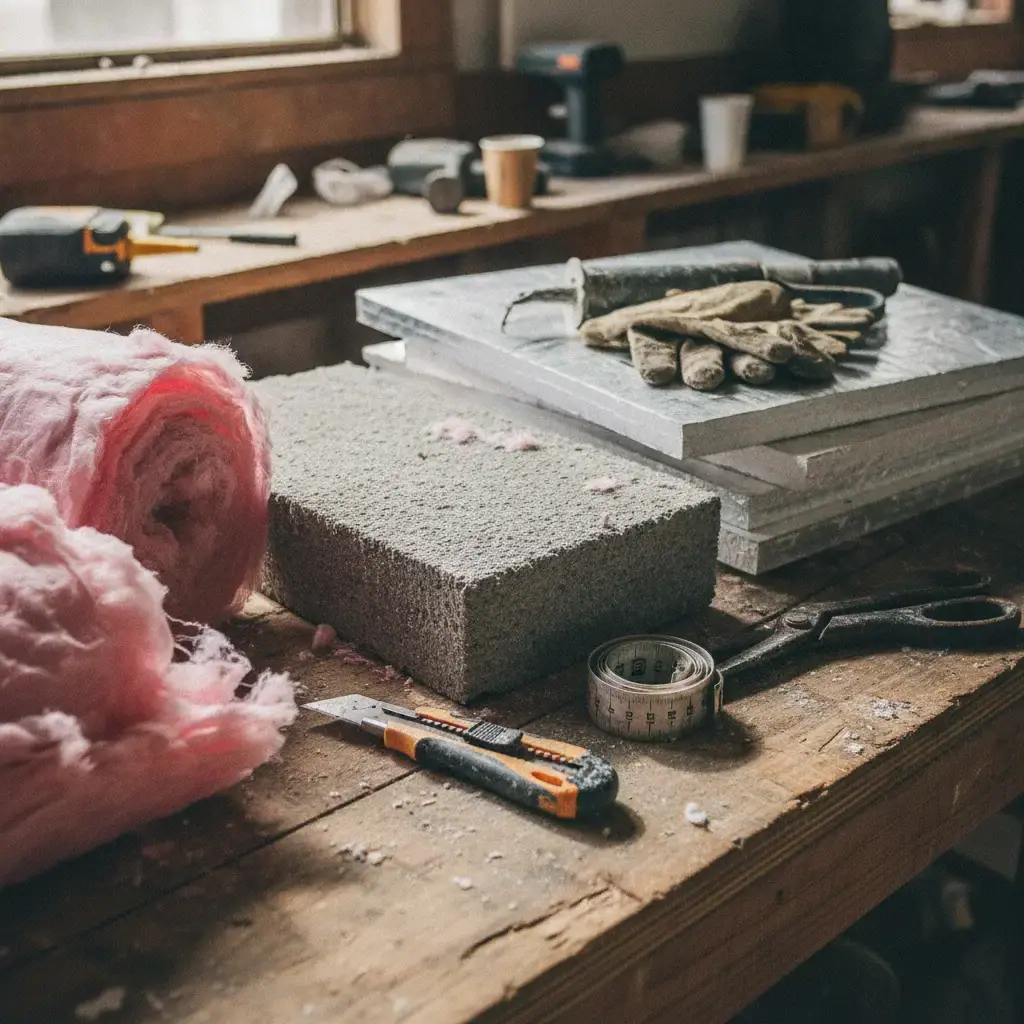
Crawl Space Encapsulation Cost in Hawthorne, CA
Transparent Crawl Space Encapsulation Cost Pricing for Hawthorne, CA Homeowners — Free Estimates
Get accurate crawl space encapsulation cost in Hawthorne, CA. Hawthorne Insulation Pros offers free estimates for South Bay homes. Call (424) 449-0089 today.
Crawl space encapsulation is the process of sealing your home’s crawl space with heavy-duty vapor barriers, rigid foam insulation, and moisture control systems to create a clean, conditioned environment beneath your floors. In Hawthorne, CA, where marine layer humidity, clay-heavy soils, and aging mid-century housing stock create persistent moisture challenges, encapsulation is not a luxury — it is a structural necessity.
At Hawthorne Insulation Pros, we specialize in providing transparent, accurate crawl space encapsulation cost estimates tailored to the specific conditions found in Hawthorne homes. From post-war bungalows near Ramona Avenue to modern infill construction close to the 105 Freeway corridor, our team understands how local soil behavior, coastal climate patterns, and regional building codes affect both the scope and the price of your encapsulation project. Call us today at (424) 449-0089 for a free on-site assessment.
Understanding Crawl Space Encapsulation in Hawthorne, CA
Crawl space encapsulation refers to a comprehensive moisture management system installed beneath a home’s floor structure. Unlike simple vapor barriers that were standard practice through the 1970s and 1980s — thin 6-mil poly sheeting laid loosely on soil — modern encapsulation systems use reinforced 12-mil to 20-mil polyethylene liners that are sealed at all seams, adhered to foundation walls, and integrated with drainage and ventilation systems. The goal is to convert an open, vented crawl space into a semi-conditioned zone that resists moisture intrusion, pest entry, and air quality degradation.
Historically, California building codes prior to the 1990s permitted and even encouraged vented crawl spaces under the assumption that cross-ventilation would remove moisture naturally. In coastal communities like Hawthorne — situated roughly 4 miles east of the Pacific Ocean — this assumption proved flawed. Seasonal marine layer conditions push ambient outdoor relative humidity above 80% for weeks at a time between May and August, a phenomenon locals call “June Gloom.” When that humid outdoor air enters a vented crawl space, it meets cooler soil and condenses, creating exactly the moisture environment that building codes were trying to prevent.
Read moreShow less
The prevalence of crawl space moisture problems in Hawthorne is closely tied to the city’s dominant housing era. According to Los Angeles County assessor records, a significant portion of Hawthorne’s residential housing stock was constructed between 1945 and 1965, during the post-World War II suburban expansion driven in part by nearby Douglas Aircraft Company employment. These homes were built quickly, often with shallow crawl spaces between 18 and 30 inches in height, pier-and-beam or concrete perimeter foundations, and minimal moisture protection. Decades of seasonal humidity cycling have caused original vapor barriers — where they exist at all — to deteriorate, crack, and fail.
Modern encapsulation addresses these legacy issues comprehensively by combining liner installation, wall insulation, conditioned air supply or exhaust ventilation, and in many cases sump pump or French drain integration. Understanding each component is essential to understanding the full cost picture for Hawthorne homeowners.
Why Crawl Space Encapsulation Is Needed in Hawthorne, CA
Marine Layer Humidity and the “June Gloom” Effect
Hawthorne sits within the coastal fog belt that extends inland from the Pacific Ocean. The National Weather Service station at Los Angeles International Airport — located approximately 2.1 miles west of central Hawthorne — records average relative humidity levels between 78% and 85% during morning hours from May through August. Outdoor air at this humidity level, when drawn through foundation vents into a crawl space, deposits measurable condensation on wood joists, subfloor plywood, and soil surfaces. Over a single “June Gloom” season, this condensation cycle can raise crawl space wood moisture content from a safe 12–15% to a fungal-risk threshold of 19% or higher.
Expansive Clay Soils Beneath Hawthorne Neighborhoods
The Dominguez Hills geological formation underlies much of central and southern Hawthorne. This formation includes expansive Montmorillonite clay soils that absorb water during winter rainfall events and release it slowly through evaporation during dry months. The El Niño rainfall seasons of 2016–2017 (which recorded 21.73 inches at nearby Inglewood measuring stations) and 2022–2023 (approximately 19.8 inches at LAX) saturated these clay layers, causing ground moisture to migrate upward into crawl spaces through capillary action. Homes built on slab-adjacent or shallow crawl space foundations in neighborhoods like El Camino Village and the streets surrounding Yukon Avenue experienced measurable moisture increases in the seasons following these events.
Proximity to Storm Drain Infrastructure
The Hawthorne Municipal Storm Drain system, which connects to the larger Dominguez Channel watershed, runs beneath several residential streets in the city’s eastern and southern precincts. During heavy rainfall, hydrostatic pressure in soil adjacent to older clay-tile or concrete storm drain laterals can push groundwater laterally toward residential foundations. Streets in the Bodger Park neighborhood and areas near Grevillea Avenue have historically reported higher-than-average crawl space moisture complaints following major rain events, according to city public works maintenance records.
Airport Noise Abatement and Air Sealing History
Beginning in the 1990s, many Hawthorne homes near the LAX flight path received partial noise insulation upgrades through the Airport Noise Mitigation program. While these upgrades addressed above-grade insulation and window sealing, crawl spaces were largely excluded from scope. This means many homes improved above-grade air sealing while leaving crawl space vents — which allow moisture and air exchange — untouched, creating pressure imbalances that can actually increase crawl space air infiltration during coastal wind events.
Aging Pier-and-Beam Foundations
A significant share of pre-1960 Hawthorne homes use pier-and-beam construction rather than continuous perimeter slabs. These systems expose more soil surface area and provide less lateral moisture resistance. When original tar-paper or thin poly vapor barriers on these floors degrade — typically after 20 to 30 years — the entire crawl space becomes a direct conduit for soil moisture into the living space above.
Free, no-obligation estimates
Talk to Hawthorne Insulation Pros
Tell us what you need and we’ll take it from there.
Signs You Need Crawl Space Encapsulation in Hawthorne
Structural and Flooring Indicators
- Soft, spongy, or visibly warped hardwood or laminate flooring above the crawl space
- Squeaking or bouncing floors that were previously firm, indicating subfloor swelling or joist softening
- Gaps appearing at door frames or baseboards caused by foundation movement from soil moisture cycling
- Visible white efflorescence (salt deposits) on concrete perimeter walls or piers, indicating moisture migration
Air Quality and Odor Indicators
- Persistent musty or earthy odor inside the home, especially near floor level or in rooms over the crawl space
- Unexplained allergy or respiratory symptoms that worsen in late spring and early summer — Hawthorne’s peak marine layer season
- Visible mold growth on interior wall bases or in cabinets on exterior walls
Energy and Utility Indicators
- Noticeably cold floors during winter months despite adequate heating, suggesting insulation failure beneath the subfloor
- Rising energy bills without a change in usage habits, indicating conditioned air loss through a compromised crawl space envelope
Urgency Indicators
- Active standing water in crawl space at any time of year — this requires immediate professional assessment
- Visible fungal growth (white, gray, or black) on wood joists or subfloor decking
- Evidence of rodent or insect activity, which is dramatically increased by moisture-damaged insulation
Our process
Our Crawl Space Encapsulation Process in Hawthorne
Hawthorne Insulation Pros follows a structured, multi-step encapsulation process designed for the specific conditions found in South Bay residential crawl spaces. Here is what to expect from start to finish.
- 01
Free On-Site Assessment (1–2 Hours)
Our technician enters the crawl space to measure square footage, assess ceiling height, document existing vapor barriers, test wood moisture content with a calibrated moisture meter, and photograph any damage, mold, or standing water. In Hawthorne homes near t
- 02
Detailed Written Estimate (24–48 Hours After Assessment)
We provide an itemized written estimate specifying liner grade, wall insulation type, drainage solution (if needed), and labor hours. Estimates include separate line items so homeowners clearly understand what drives cost.
- 03
Debris Removal and Old Vapor Barrier Disposal (Half to Full Day)
We remove deteriorated fiberglass batt insulation, failed poly sheeting, debris, and any mold-affected organic material. All waste is bagged and disposed of in compliance with Los Angeles County health and waste regulations.
- 04
Mold Remediation Treatment (If Required — 1 Day)
When fungal growth is present on wood surfaces — a common finding in Hawthorne crawl spaces that experienced the post-2017 or post-2023 El Niño saturation periods — we apply EPA-registered antimicrobial treatment and allow a cure period before sealing.
- 05
Liner Installation and Seaming (1–2 Days Depending on Square Footage)
We install reinforced 12-mil to 20-mil polyethylene liner across the soil floor, overlapping seams by a minimum of 12 inches and securing with waterproof tape and mechanical fasteners. Liner is run up foundation walls and adhered with closed-cell foam adhesive
- 06
Wall Insulation and Vent Sealing (Half Day)
Foundation vents are sealed with rigid foam vent covers and spray foam perimeter sealing. Rigid foam board or spray foam insulation is installed on interior crawl space walls to the appropriate R-value for Los Angeles County’s Climate Zone 9.
- 07
Drainage, Ventilation, and Final Inspection (Half Day)
Where needed, a drainage mat or interior French drain channel is installed before liner placement. We assess the need for a conditioned air supply duct or exhaust fan to maintain the encapsulated space within appropriate humidity parameters. A final moisture m
Crawl Space Encapsulation Methods Used in Hawthorne
Full Perimeter Encapsulation with Conditioned Air Supply
The most comprehensive method, recommended for Hawthorne homes with below-grade crawl spaces, expansive clay soil contact, or documented moisture damage. Involves full liner installation, wall insulation, vent sealing, and a small conditioned air supply duct or dehumidifier. Best suited for properties in Bodger Park and El Camino Village where Montmorillonite clay soil activity is highest.
Partial Liner Installation with Dehumidifier Integration
Used when budget is a primary constraint or crawl space conditions are moderate. A high-quality liner is installed across the soil floor without full wall coverage, paired with a crawl space-rated dehumidifier. This approach is effective for Hawthorne homes with adequate crawl space height (24 inches or more) and no active drainage issues.
Spray Foam Wall and Band Joist Sealing
In cases where the primary concern is air infiltration rather than soil moisture — common in older Hawthorne homes upgraded under the LAX noise abatement program — we apply closed-cell spray foam to foundation walls, rim joists, and band joists. This creates a thermal and air barrier without a full floor liner. Learn more about our spray foam insulation services
Drainage System Integration
For properties near the Dominguez Channel storm infrastructure or on low-gradient lots, an interior perimeter drainage channel and sump pit are installed before liner placement to manage active water intrusion. This is the appropriate method when standing water is observed during assessment.
Hybrid Encapsulation with Existing Foundation Repair
Some Hawthorne pier-and-beam foundations require partial repair or pier stabilization before encapsulation is viable. We coordinate with licensed foundation contractors when necessary and integrate encapsulation into the post-repair scope.
Crawl Space Encapsulation Cost in Hawthorne, CA
Understanding the full cost of crawl space encapsulation in Hawthorne requires looking at both national benchmarks and the local factors that adjust those figures for South Bay conditions.
Typical Cost Ranges
- Basic vapor barrier only (6–10 mil liner, no wall sealing): $1,500 – $3,000 for an average 1,000–1,200 sq ft Hawthorne crawl space
- Standard full encapsulation (12–20 mil liner, vent sealing, wall insulation): $3,500 – $7,000 for the same footprint
- Premium encapsulation with drainage system and dehumidifier: $7,000 – $15,000 or more depending on drainage complexity
- Mold remediation add-on (if required): $500 – $2,500 depending on affected area
Key Cost Factors in Hawthorne
- Crawl space accessibility: Many post-war Hawthorne homes have access hatches smaller than 18 x 24 inches, requiring custom access cuts that add labor costs
- Crawl space height: Heights below 18 inches require additional time and specialized equipment, which is reflected in per-square-foot labor rates
- Soil condition: Clay soil heaving after 2022–2023 rainfall may require leveling before liner installation
- Liner grade selected: 12-mil costs approximately $0.25–$0.40 per sq ft in materials; 20-mil costs $0.50–$0.75 per sq ft
- Los Angeles County labor market: Prevailing wages in the South Bay are higher than national averages, contributing roughly 15–20% above national benchmark pricing
Hawthorne Insulation Pros provides free itemized estimates. Call (424) 449-0089 to schedule yours. Explore our full crawl space insulation services
Hawthorne Neighborhoods We Serve
Bodger Park
Located in southeastern Hawthorne, Bodger Park features primarily ranch-style homes constructed in the 1950s and early 1960s. These properties frequently have pier-and-beam construction with original deteriorated tar-paper vapor barriers. Proximity to the Dominguez Channel corridor increases groundwater migration risk, particularly following heavy rainfall events.
El Camino Village
A mid-century residential pocket along the eastern edge of Hawthorne, El Camino Village homes sit on clay-heavy soil profiles with relatively shallow crawl spaces. Post-2017 El Niño moisture intrusion affected several streets in this area, and we have completed multiple post-flood encapsulation projects here.
Holly Glen and Del Aire
These northern Hawthorne neighborhoods contain some of the oldest residential housing stock in the city, including 1940s wartime-era construction. Crawl spaces in this area often feature original materials in poor condition and substandard ventilation. Homes near Rosecrans Avenue and Aviation Boulevard in this corridor regularly test above the 19% wood moisture threshold.
Downtown Hawthorne Core
The blocks surrounding Hawthorne Boulevard between El Segundo Boulevard and Imperial Highway include a mix of older single-family homes and newer infill construction. Encapsulation needs vary widely in this zone, from legacy moisture issues in pre-1960 homes to air-sealing optimization in 2000s-era construction.
Crawl Space Encapsulation Maintenance Tips for Hawthorne Homeowners
- Inspect annually before June Gloom season (April–May): Walk the perimeter of your foundation and check for displaced liner edges, torn seams, or condensation under the liner — the most common early failure signs in Hawthorne’s coastal humidity cycle.
- Check vent seal covers after winter storms: Heavy rain events like those recorded in January 2023 can shift rigid vent covers; verify they remain fully seated and sealed after any storm producing more than 1 inch of rainfall.
- Monitor dehumidifier drainage (if installed): Condensate lines can become clogged with mineral deposits from Hawthorne’s moderately hard municipal water supply; flush and inspect quarterly.
- Test crawl space wood moisture content every 2 years: Use a pin-type moisture meter on accessible joists; readings above 16% warrant a professional inspection.
- Maintain exterior drainage slope: Ensure landscaping and hardscaping adjacent to your foundation maintain a minimum 6-inch drop over 10 feet to direct rainwater away from the crawl space perimeter.
- Inspect for pest entry points: California ground squirrels and roof rats are common in the Hawthorne area and will exploit gaps in liner or wall insulation; seal any intrusion points promptly.
- Keep access hatch weatherstripped: The crawl space access door is a common air and moisture bypass; replace weatherstripping every 3–5 years.
Why Choose Hawthorne Insulation Pros
Hawthorne Insulation Pros is a locally based insulation and encapsulation company serving the South Bay communities of Los Angeles County. Our technicians are trained specifically in the moisture dynamics of coastal Southern California — including the marine layer humidity patterns, expansive clay soil behavior, and mid-century housing conditions unique to Hawthorne — rather than applying generic inland-California approaches to a coastal problem.
We offer the full spectrum of services Hawthorne homeowners need: insulation installation, attic insulation, blow-in insulation, insulation removal and replacement, spray foam insulation, and complete crawl space insulation and encapsulation systems. This integrated expertise means we can identify when a crawl space problem has secondary causes — such as attic air pressure imbalance or failed wall insulation — and address them in a coordinated scope rather than leaving underlying issues unresolved.
Every project begins with a free, no-obligation on-site assessment, and every estimate is itemized and transparent. Call us at (424) 449-0089 to speak with a local specialist.
FAQ
Frequently Asked Questions: Crawl Space Encapsulation Cost in Hawthorne, CA
How much does crawl space encapsulation cost in Hawthorne, CA?
For a typical Hawthorne home with a 1,000–1,400 square foot crawl space, full encapsulation ranges from $3,500 to $8,500 depending on liner grade, wall insulation scope, and whether drainage or mold remediation is required. Homes in Bodger Park or El Camino Village near drainage corridors often fall in the higher end of this range due to soil moisture complexity.
How long does crawl space encapsulation take in Hawthorne?
Most standard encapsulation projects in Hawthorne are completed in 2 to 4 days. Larger homes, tight crawl spaces below 18 inches in height, or projects requiring mold remediation or drainage installation may extend to 5 to 7 days. We provide a project timeline in writing with every estimate.
Is crawl space encapsulation worth the cost in the Hawthorne area?
Yes. Given Hawthorne’s persistent marine layer humidity, clay soil moisture migration, and aging housing stock, untreated crawl spaces accumulate moisture damage that can cost $15,000 to $40,000 or more in structural repairs over time. Encapsulation at $4,000–$8,000 is a cost-effective preventive investment that also typically reduces energy bills by 10–15% by improving the building envelope.
Will encapsulation eliminate the musty smell in my Hawthorne home?
In most cases, yes. Musty odors in South Bay homes are predominantly caused by microbial activity in moist crawl spaces, and encapsulation combined with mold remediation (when needed) eliminates the source. Odor improvement is typically noticeable within 2 to 4 weeks of project completion as residual air exchanges out of the sealed space.
Do I need a permit for crawl space encapsulation in Hawthorne?
Most crawl space encapsulation projects in Hawthorne do not require a building permit, as they are classified as maintenance or improvement work rather than structural alteration. However, if the project includes electrical work for a dehumidifier or HVAC modifications for conditioned air supply, a permit may be required from the City of Hawthorne Building and Safety Division. We advise homeowners on permit requirements during the assessment phase.
How is crawl space encapsulation different from a basic vapor barrier?
A basic vapor barrier is typically a single layer of 6-mil polyethylene sheeting laid loosely on the crawl space floor. Full encapsulation includes a heavier, reinforced liner (12–20 mil), sealed seams, wall coverage, foundation vent sealing, wall insulation, and often mechanical ventilation or drainage. In Hawthorne’s climate, a basic vapor barrier alone is insufficient to manage seasonal humidity cycling and has a service life of only 10–15 years before degrading.
What happens if I don’t encapsulate my Hawthorne crawl space?
Without encapsulation, Hawthorne homes with vented crawl spaces will continue to experience seasonal moisture cycling driven by June Gloom humidity. Over 5 to 10 years, this typically results in subfloor wood moisture content exceeding fungal growth thresholds, gradual deterioration of floor structure, increased pest activity, higher heating and cooling costs, and potential health impacts from airborne mold spores.
Can I combine crawl space encapsulation with other insulation services?
Absolutely. Many Hawthorne homeowners combine crawl space encapsulation with attic insulation upgrades or old insulation removal as part of a whole-home energy performance improvement. Bundling services in a single project mobilization can reduce overall labor costs and maximize the thermal and moisture performance improvements achieved.
Get Your Free Crawl Space Encapsulation Estimate in Hawthorne Today
If your Hawthorne home has musty odors, soft floors, rising energy bills, or a crawl space that hasn’t been inspected in more than five years, now is the time to act — especially before the June Gloom humidity season arrives. Hawthorne Insulation Pros provides free, no-pressure, on-site assessments with detailed written estimates and transparent pricing.
Call us at (424) 449-0089 to schedule your assessment. We serve all Hawthorne neighborhoods including Bodger Park, El Camino Village, Holly Glen, Del Aire, and the Downtown Hawthorne corridor. Our team is standing by to help you protect your home’s structure, improve your indoor air quality, and reduce your energy costs with a professionally installed crawl space encapsulation system built for South Bay conditions.
Contact us online to request your free estimate
Get in touch
Find insulation help near you
Request a free estimate online or give us a call — our team will follow up quickly.
- Call us(424) 449-0089
- Visit4910 W Rosecrans Ave, Hawthorne, CA 90250
- HoursMon-Sun 07:00-19:00