
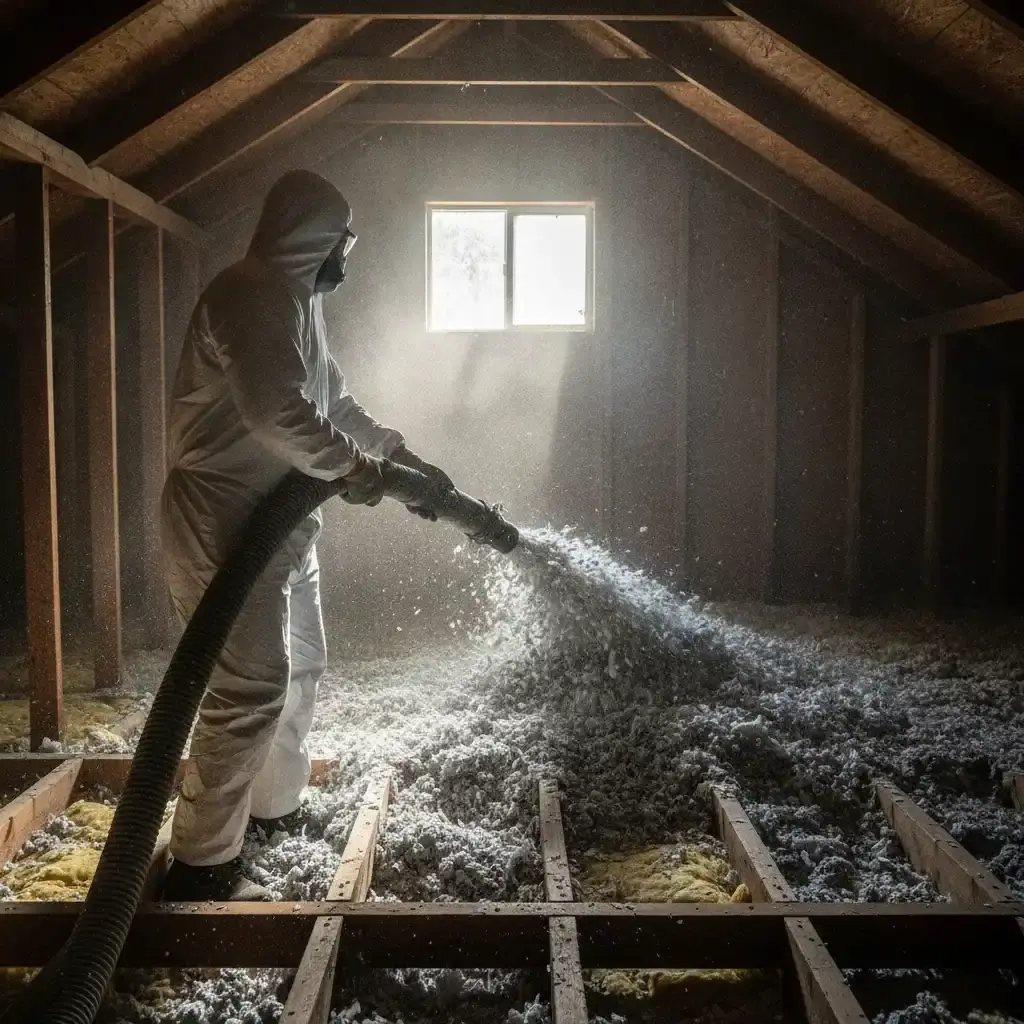
Ceiling Insulation in Hawthorne, CA
Energy-Saving Ceiling Insulation for Hawthorne, CA Homes — Licensed & Insured
Need ceiling insulation in Hawthorne, CA? Hawthorne Insulation Pros offers R-38 upgrades, spray foam & blow-in services. Free estimates. Call (424) 449-0089 today.
Ceiling insulation is the thermal and acoustic barrier installed between your living space and the roof assembly above — trapping conditioned air inside and blocking radiant heat from penetrating your home. In Hawthorne, CA, where coastal marine layer mornings give way to intense afternoon sun and Santa Ana wind events can push temperatures above 100°F, a properly insulated ceiling is not a luxury — it is a structural necessity.
Hawthorne sits in the South Bay region of Los Angeles County, just three miles from Los Angeles International Airport. That proximity means residents contend with persistent jet-noise vibration, which degrades ceiling insulation materials faster than in quieter inland communities. The city’s dense mix of post-World War II bungalows, mid-century duplexes, and newer mixed-use construction each presents unique insulation challenges that require local knowledge to address correctly.
Read moreShow less
At Hawthorne Insulation Pros, we specialize in ceiling insulation solutions tailored to the building stock, climate, and regulatory environment of Hawthorne and the surrounding South Bay. Call us today at (424) 449-0089 for a free on-site assessment.
Understanding Ceiling Insulation
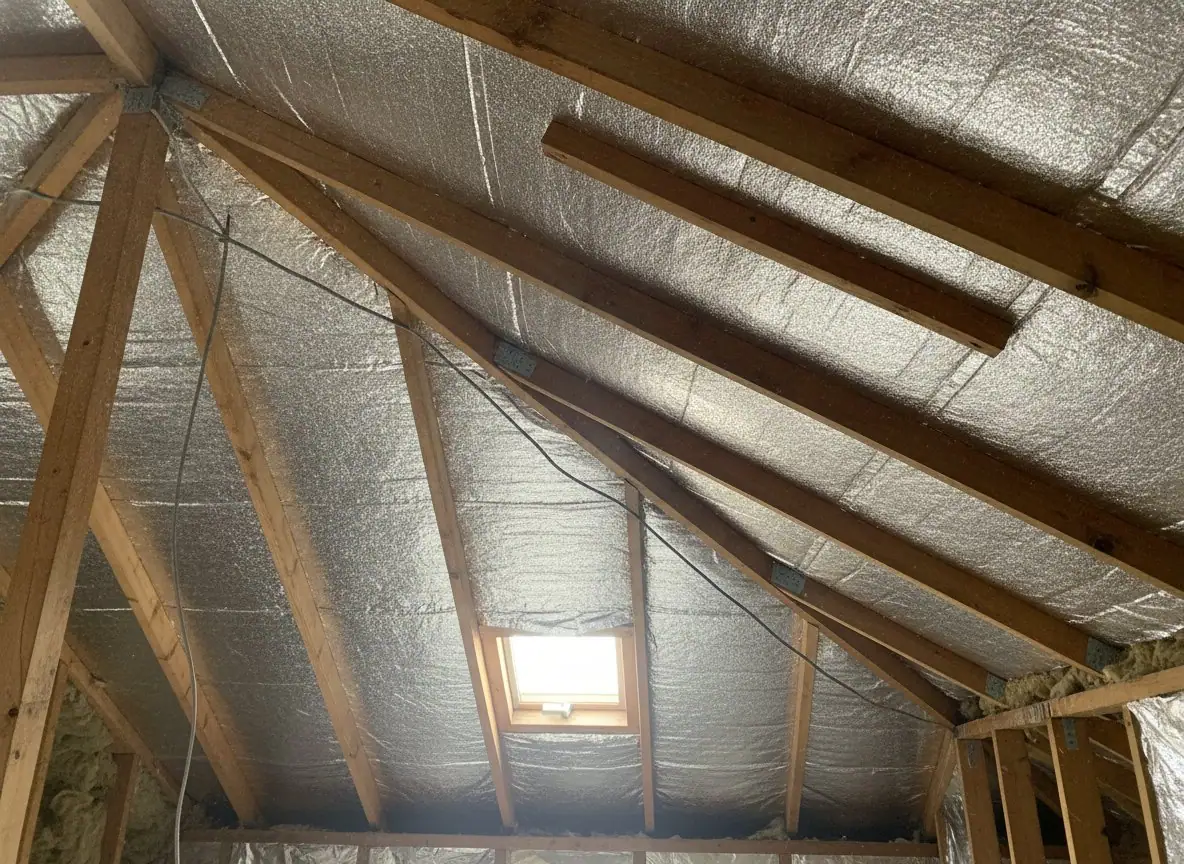
Ceiling insulation refers to any thermally resistant material installed at the ceiling plane — either between the floor joists of an upper story, along the attic floor above finished rooms, or directly against roof decking in unventilated assemblies. The primary metric used to measure its effectiveness is the R-value: a numerical rating of thermal resistance per inch of material. Higher R-values mean greater resistance to heat flow.
The science behind ceiling insulation dates to the early twentieth century, when engineers first quantified that heat rises and that uninsulated ceilings in warm climates allow radiant energy from hot roof surfaces to pour directly into living spaces. By the 1940s and 1950s — precisely when much of Hawthorne’s housing stock was built to accommodate the aerospace and manufacturing boom tied to companies like Northrop and North American Aviation — builders used minimal insulation standards that would be considered grossly inadequate today. Many of those original homes received just 2 to 3 inches of loose rock wool insulation, delivering an R-value of approximately R-7, compared to the current California Title 24 minimum requirement of R-38 for climate zone 8, which encompasses Hawthorne.
Read moreShow less
Modern ceiling insulation encompasses several material categories: fiberglass batts, blown-in cellulose, blown-in fiberglass, open-cell spray foam, and closed-cell spray foam. Each material behaves differently under Hawthorne’s specific conditions of high ultraviolet radiation, salt-laden marine air, and the mechanical stress introduced by aircraft overflight vibration along the LAX flight corridors that cross directly over residential neighborhoods including Holly Glen and Ramona neighborhoods.
Beyond thermal performance, ceiling insulation also delivers critical acoustic attenuation. Dense-pack cellulose and closed-cell spray foam, in particular, reduce sound transmission coefficients measurably — a significant benefit for the roughly 35,000 residents who live within the FAA-designated 65-decibel noise contour surrounding LAX, a boundary that cuts through central Hawthorne along corridors near West El Segundo Boulevard and Imperial Highway.
Understanding the type of ceiling assembly in your home — whether it is a flat-roof construction common in 1950s ranch homes, a vaulted cathedral ceiling found in 1960s split-levels, or a conventional attic above a drywall ceiling — determines which insulation method will deliver the best thermal and acoustic outcome. Learn more about our attic insulation services
Why Ceiling Insulation Is Needed in Hawthorne, CA
The LAX Noise and Vibration Factor
Los Angeles International Airport processed over 65 million passengers annually before the 2020 pandemic and has been expanding its operations steadily since. Hawthorne lies directly beneath one of the primary LAX departure and arrival corridors. Aircraft departing runway 24L and 24R fly directly over the Holly Glen neighborhood, portions of North Hawthorne near West 120th Street, and the Bodger Park area at altitudes as low as 1,800 feet. The resulting 65–75 decibel noise events occur dozens of times per hour during peak periods and physically vibrate attic structures, compressing loose-fill insulation over time. Studies by the Los Angeles World Airports noise management program have documented that homes within the 65 dB contour — which encompasses a large portion of Hawthorne — experience measurable insulation settlement and structural fatigue at higher rates than comparable homes outside noise corridors.
The Aging Housing Stock Problem
The 2020 U.S. Census estimated Hawthorne’s housing median construction year at 1959. A substantial portion of the city’s approximately 16,000 housing units were built between 1945 and 1965, during the post-war aerospace-driven population surge. These structures were constructed under the 1946 Los Angeles County Building Code, which required no attic insulation whatsoever. Even homes that received voluntary insulation upgrades in the 1970s following the 1973 oil embargo — when many South Bay homeowners added basic R-11 batts — are now operating at a fraction of that original R-value due to settling, moisture damage from marine air infiltration, and pest activity.
Santa Ana Wind Events and Thermal Shock
Hawthorne experiences Santa Ana wind conditions typically between October and March. During the October 2017 Santa Ana event, sustained winds of 35–50 mph drove temperatures in the South Bay to 97°F — a 40-degree spike above seasonal norms. These thermal shock events stress poorly insulated ceilings particularly hard, because the rapid heat load causes HVAC systems to run continuously, driving up energy consumption dramatically. Southern California Edison data consistently shows that South Bay zip codes including Hawthorne’s 90250 experience above-average residential electricity consumption spikes during Santa Ana conditions, which correlates directly with inadequate ceiling insulation in aging housing.
Marine Air and Moisture Infiltration
Hawthorne’s proximity to the ocean means nighttime relative humidity regularly exceeds 80–90% from June through September — the so-called “June Gloom” season. This moisture infiltrates attic spaces through soffit vents and ridge gaps, saturating fiberglass batts that then lose thermal resistance and provide a substrate for mold growth. Neighborhoods like Ramona near the city’s western boundary are particularly susceptible due to lower elevation and greater marine air concentration.
Free, no-obligation estimates
Talk to Hawthorne Insulation Pros
Tell us what you need and we’ll take it from there.
Signs You Need Ceiling Insulation in Hawthorne
Energy and Comfort Indicators
- Monthly Southern California Edison bills exceeding $180–$220 during summer months in a standard 1,200–1,500 square foot Hawthorne home
- Rooms beneath the attic that feel 8–12°F warmer than the thermostat set point during afternoon hours
- HVAC system running continuously for 3 or more hours without reaching the target temperature during Santa Ana wind events
- Noticeable hot spots or cold drafts at ceiling-wall junctions
Physical and Visual Symptoms
- Visible gaps, compression, or discoloration in attic insulation when viewed from the access hatch
- Insulation depth below 10 inches for blown-in fiberglass or cellulose (indicating sub-R-38 performance)
- Water staining on ceiling drywall indicating moisture bypassing degraded insulation
- Pest droppings or tunneling evidence in attic insulation — common in Hawthorne due to rat activity documented by Los Angeles County Vector Control
Acoustic Warning Signs
- Significantly increased aircraft noise audibility inside the home compared to two to three years ago
- Conversations from adjacent rooms heard through the ceiling — indicating acoustic insulation breakdown
Age-Based Urgency
If your Hawthorne home was built before 1975 and has never received an insulation upgrade, treat the situation as urgent. Original materials are almost certainly performing at less than half their rated R-value.
Our process
Our Ceiling Insulation Process in Hawthorne
- 01
On-Site Thermal Assessment (1–2 Hours)
Our team begins with a no-cost on-site visit to your Hawthorne home. We use a calibrated infrared thermal imaging camera to map heat transfer patterns across your ceiling surface. This technology reveals cold zones, thermal bridges at ceiling joists, and areas
- 02
Existing Material Evaluation (30 Minutes)
We sample and identify existing insulation materials — critical in Hawthorne’s pre-1978 housing stock, where urea-formaldehyde foam and vermiculite-based products were occasionally used and require specialized handling under California Department of Toxic Subs
- 03
Insulation Removal if Required (Half to Full Day)
When existing materials are contaminated, pest-infested, or moisture-damaged, we perform complete removal using HEPA-filtered vacuum equipment. All removed material is bagged and disposed of at a licensed Los Angeles County facility. Learn about our insulation
- 04
Air Sealing (2–4 Hours)
Before any new insulation is installed, we seal all attic penetrations — recessed light fixtures, plumbing chases, electrical junction boxes — with two-part spray foam or fire-rated caulk. In Hawthorne’s older homes, unsealed top plates are among the primary p
- 05
Insulation Installation (Half to Full Day)
We install the selected insulation material to achieve a minimum of R-38 per California Title 24 requirements for climate zone 8. For attic floors, we typically deploy blown-in insulation to achieve uniform depth across irregular joist cavities. For cathedral
- 06
Verification and Documentation (1 Hour)
Post-installation, we re-measure insulation depth at all documented sample points and provide a written certificate of installed R-value — required for certain Southern California Edison energy rebate applications.
- 07
Final Walkthrough and Rebate Guidance
We walk you through current SCE and SoCalGas rebate programs available to Hawthorne residents for qualifying insulation upgrades, which can offset $100–$400 of project cost depending on installed R-value and home square footage.
Ceiling Insulation Methods We Use in Hawthorne
Blown-In Fiberglass or Cellulose
The most common method for Hawthorne’s conventional attic-over-ceiling construction. Blown-in material achieves consistent depth across irregular joist bays and around attic obstructions without gaps. Cellulose, made from recycled paper treated with boric acid, delivers excellent acoustic mass — a meaningful benefit in the LAX noise corridor. Typical application achieves R-38 at approximately 10–11 inches of cellulose depth. Explore our blow-in insulation options
Spray Foam Insulation
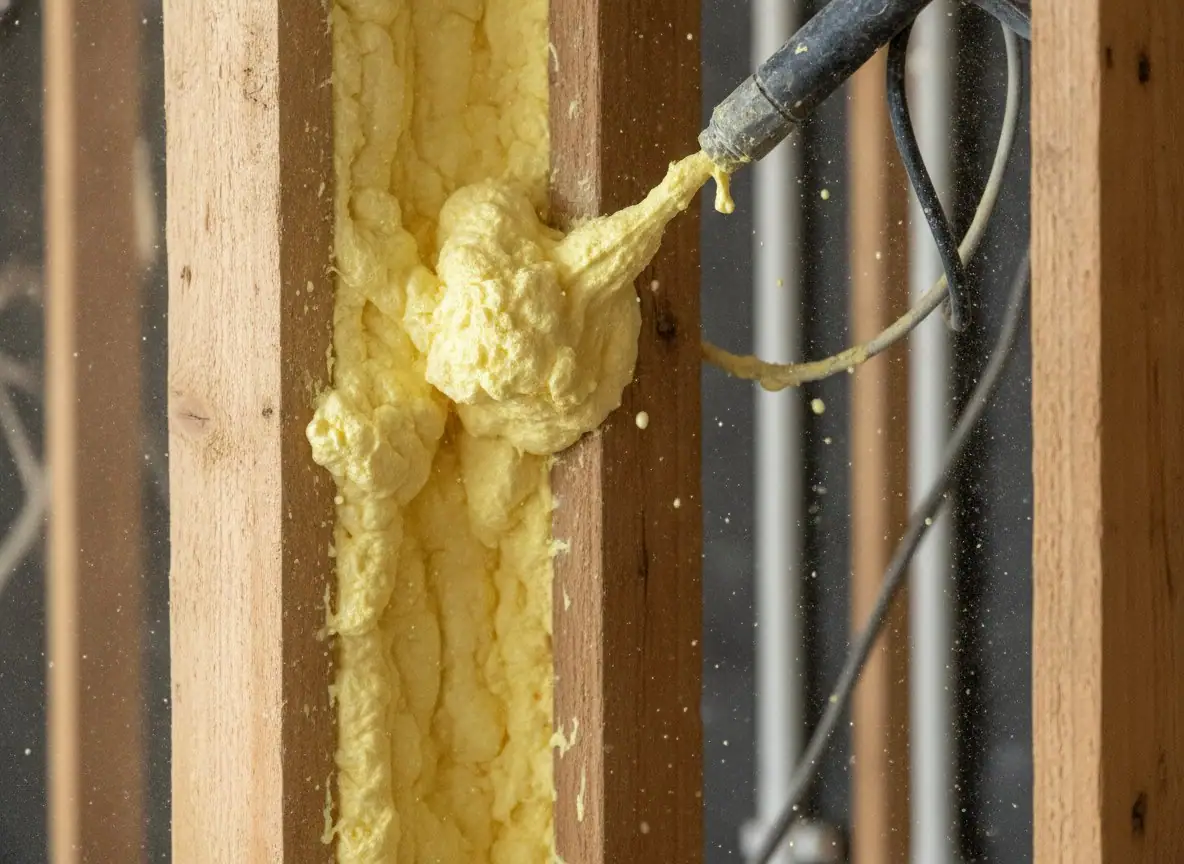
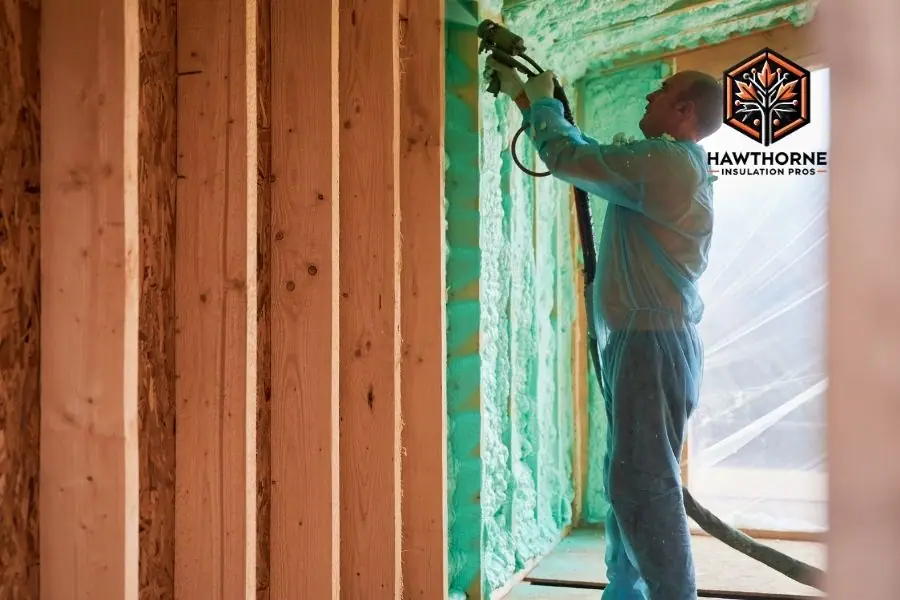
Open-cell spray foam is suited for cathedral ceilings and roof deck applications where vapor management and air sealing must be achieved simultaneously. Closed-cell spray foam delivers R-6.5 per inch and is the preferred choice for flat-roof applications common in Hawthorne’s 1950s construction, where attic depth is minimal. Learn about spray foam insulation
Learn moreFiberglass Batt Insulation
Used primarily for new construction or open-cavity applications during remodeling. R-38 batts require a minimum of 10 inches of cavity depth. Best applied in second-floor ceiling cavities during renovation projects.
Learn moreDense-Pack Cellulose
For enclosed ceiling cavities inaccessible from the attic — a situation common in Hawthorne’s flat-roof bungalows — we drill small access holes and inject dense-pack cellulose at 3.5 lbs/cubic foot density. This method prevents settling and provides excellent sound attenuation.
Combination Approaches
Many Hawthorne homes benefit from a hybrid approach: two inches of closed-cell spray foam at the ceiling deck for air sealing and moisture control, topped with blown-in cellulose to achieve target R-value. This combination is particularly effective in the Holly Glen area where marine air infiltration is most pronounced.
Ceiling Insulation Cost in Hawthorne, CA
Understanding ceiling insulation costs in Hawthorne requires accounting for several local factors that distinguish South Bay pricing from statewide averages.
Typical Price Ranges
- Blown-in attic insulation (to R-38): $1.50–$2.50 per square foot installed. A typical 1,200 sq ft Hawthorne bungalow attic floor runs $1,800–$3,000 complete.
- Spray foam ceiling insulation: $3.00–$7.00 per square foot depending on closed-cell versus open-cell and required depth. A 1,000 sq ft flat-roof application typically ranges from $3,000–$7,000.
- Fiberglass batt installation: $1.00–$1.75 per square foot for accessible open-cavity work.
- Dense-pack enclosed cavity: $2.50–$4.00 per square foot including access hole drilling and patching.
- Full insulation removal and replacement: $3,500–$6,500 for a typical 1,200–1,500 sq ft Hawthorne home, including haul-away and new R-38 installation.
Read moreShow less
Hawthorne-Specific Cost Factors
Los Angeles County disposal fees for contaminated insulation materials add $150–$400 to projects requiring full removal. Homes beneath the LAX flight corridor frequently require heavier acoustic-grade cellulose rather than standard blown-in fiberglass, adding approximately $0.25–$0.50 per square foot. Permit fees through the City of Hawthorne Building and Safety Division typically run $150–$350 for permitted insulation projects.
Available Rebates
Southern California Edison’s Home Energy Improvement Program offers rebates of $0.10–$0.15 per square foot for attic insulation upgrades reaching R-38 or above in existing homes. Combining rebates with project cost can reduce your net ceiling insulation cost in Hawthorne, CA by $120–$300 depending on home size. Call us at (424) 449-0089 for a detailed estimate.
Hawthorne Neighborhoods We Serve
Holly Glen
Located in the northeastern quadrant of Hawthorne, Holly Glen’s housing stock was constructed primarily between 1948 and 1962 to house North American Aviation workers. Homes here sit within the 65 dB LAX noise contour and frequently present with severely settled original rock wool insulation. We commonly install dense-pack cellulose upgrades in this neighborhood due to its enclosed ceiling cavity construction.
Bodger Park
A mid-century residential district in central Hawthorne, Bodger Park features a mix of 1950s ranch homes and 1960s duplexes. Flat-roof construction is prevalent, making spray foam the preferred ceiling insulation approach. Many homes here have had partial insulation upgrades that created uneven R-value distribution — a pattern our thermal imaging consistently reveals.
Ramona
Hawthorne’s westernmost neighborhood borders El Camino Village and receives the highest marine air exposure of any district in the city. Moisture-damaged fiberglass batts are the primary issue here. We typically recommend full removal and replacement with moisture-resistant closed-cell foam or borate-treated cellulose.
North Hawthorne (Eucalyptus Area)
North of El Segundo Boulevard, this area includes a significant number of post-1980 construction homes with conventional ventilated attics. Many still fall short of current R-38 minimums and benefit from blown-in topping upgrades averaging 4–6 inches of additional cellulose depth.
Ceiling Insulation Maintenance Tips for Hawthorne Homeowners
- Inspect attic insulation depth annually — ideally each October before Santa Ana season. Use a ruler at multiple points to confirm depth has not settled below 10 inches for cellulose or 12 inches for blown-in fiberglass.
- Check soffit vents each spring for blockage from insulation drift, which is common after strong Santa Ana wind events that vibrate the attic structure.
- Inspect for moisture staining at the attic floor after the June Gloom season (August–September). Wet insulation must be dried or replaced promptly to prevent mold growth.
- Look for pest evidence — rat tunneling is documented citywide by LA County Vector Control and can displace 15–20% of attic insulation volume annually if unchecked.
- Seal new attic penetrations immediately after any electrical or HVAC work. New recessed lighting, in particular, creates major thermal bypasses if uninsulated.
- Review your SCE bill each July — a year-over-year increase of more than 12% during comparable weather conditions often signals insulation degradation.
- Keep attic access hatches properly gasketed and insulated on their back face with a minimum R-15 rigid foam panel.
Why Choose Hawthorne Insulation Pros
Hawthorne Insulation Pros is a locally focused insulation contractor built specifically around the South Bay market. We understand the City of Hawthorne’s permitting process through Building and Safety Division at 4455 W. 126th Street, and we stay current with California Title 24 energy code requirements for climate zone 8, which governs every insulation project in this city.
Our team has direct experience with the unique combination of challenges Hawthorne presents: LAX-corridor acoustic demands, post-war flat-roof construction, marine air moisture management, and the aging housing stock that characterizes the 90250 zip code. We do not apply one-size-fits-all solutions from a general playbook — we diagnose each home individually using calibrated thermal imaging and prescribe the method that matches that specific building’s assembly and the homeowner’s performance goals.
Read moreShow less
We also guide every qualifying client through Southern California Edison and SoCalGas rebate programs, ensuring you capture every available incentive for your upgrade. Our work is backed by the manufacturer warranties on every material system we install, and we provide written post-installation R-value certification for permit close-out and rebate documentation. Call (424) 449-0089 to speak with our Hawthorne team directly.
Explore our crawl space insulation services | See our spray foam solutions
FAQ
Ceiling Insulation FAQs — Hawthorne, CA
How much does ceiling insulation cost in Hawthorne, CA?
Ceiling insulation in Hawthorne typically costs $1.50–$2.50 per square foot for blown-in applications and $3.00–$7.00 per square foot for spray foam. A complete attic insulation upgrade for a 1,200 sq ft Hawthorne bungalow generally runs $1,800–$3,000 before applicable Southern California Edison rebates. Homes requiring prior insulation removal add $1,200–$2,500 to the total. Call us at (424) 449-0089 for a free site-specific estimate.
Does Hawthorne require a permit for insulation installation?
The City of Hawthorne Building and Safety Division requires a permit for insulation work that is part of a larger remodel or that involves spray foam application. Stand-alone blown-in insulation upgrades in existing attics typically do not require a permit under the California Residential Code as adopted by Hawthorne, but we confirm this on a project-by-project basis and handle all permit applications when required.
How long does ceiling insulation installation take in a typical Hawthorne home?
A standard blown-in attic insulation upgrade in a 1,200–1,500 sq ft Hawthorne home takes 4–6 hours from setup to cleanup, including air sealing. Projects requiring full insulation removal first typically require a full 8-hour day. Spray foam applications require an additional 24-hour cure period before the attic space can be re-entered.
What R-value do I need for ceiling insulation in Hawthorne?
California Title 24 energy code requires a minimum of R-38 for ceiling/attic insulation in climate zone 8, which includes all of Hawthorne. Homes within the LAX 65 dB noise contour may benefit from upgrading to R-49 using acoustic-grade cellulose for combined thermal and sound performance.
Can ceiling insulation really reduce LAX aircraft noise inside my home?
Yes, meaningfully. Dense-pack cellulose and closed-cell spray foam both provide measurable sound transmission reduction. While insulation alone will not eliminate aircraft noise at the 65–75 dB levels experienced in Hawthorne neighborhoods like Holly Glen, properly installed R-38 dense-pack cellulose can reduce perceived interior noise by 8–12 decibels compared to a completely uninsulated ceiling assembly — approximately the equivalent of cutting perceived loudness in half.
How do I know if my existing Hawthorne home’s insulation is still performing correctly?
The fastest self-check is to enter your attic access hatch and measure insulation depth in five or more locations. Blown-in cellulose should be at or above 10 inches for R-38. If you see less than 8 inches, compression or moisture damage is likely. You can also request our free thermal imaging assessment, which will identify performance deficiencies invisible to the naked eye.
Is ceiling insulation near me covered by Southern California Edison rebates?
Yes. SCE’s Home Energy Improvement Program offers rebates to qualifying Hawthorne residents in the 90250 zip code for attic insulation upgrades that bring existing homes to R-38 or above. Rebate amounts vary by program cycle but have historically ranged from $100 to $400 for typical South Bay home sizes. We help every qualifying client with the rebate paperwork as part of our standard service.
What is the difference between attic insulation and ceiling insulation?
Functionally, they address the same building boundary — the separation between your conditioned living space and the unconditioned attic above. “Attic insulation” typically refers to material installed on the attic floor (above the ceiling drywall), while “ceiling insulation” can also describe material applied directly to the ceiling plane or roof deck. In Hawthorne’s flat-roof homes, where there is no accessible attic floor, spray foam is applied directly to the interior ceiling or roof deck surface — making “ceiling insulation” the more precise term. Read more about attic insulation
Get a Free Ceiling Insulation Estimate in Hawthorne Today
If your Hawthorne home is uncomfortable, your energy bills are climbing, or your insulation hasn’t been evaluated since the Obama administration, now is the time to act. Hawthorne Insulation Pros provides free, no-obligation on-site thermal assessments for homeowners throughout Hawthorne, CA — including neighborhoods from Holly Glen to Ramona to Bodger Park.
We will measure your existing R-value, identify moisture or pest damage, and provide a written estimate with itemized pricing and applicable SCE rebate information — at no cost to you.
Call us now at (424) 449-0089 to schedule your free ceiling insulation assessment. Our team is available Monday through Saturday and responds to all inquiries within one business hour. Do not wait for the next Santa Ana event to find out your ceiling insulation is failing — call Hawthorne Insulation Pros today.
Schedule Your Free Assessment Online
Get in touch
Find insulation help near you
Request a free estimate online or give us a call — our team will follow up quickly.
- Call us(424) 449-0089
- Visit4910 W Rosecrans Ave, Hawthorne, CA 90250
- HoursMon-Sun 07:00-19:00