
Spray Foam Attic Insulation in Hawthorne, CA
Energy-Saving Spray Foam Attic Insulation for Hawthorne, CA Homes — Licensed & Insured
Get expert spray foam attic insulation in Hawthorne, CA. Reduce energy bills, block heat & noise from LAX. Free assessment. Call (424) 449-0089 today.
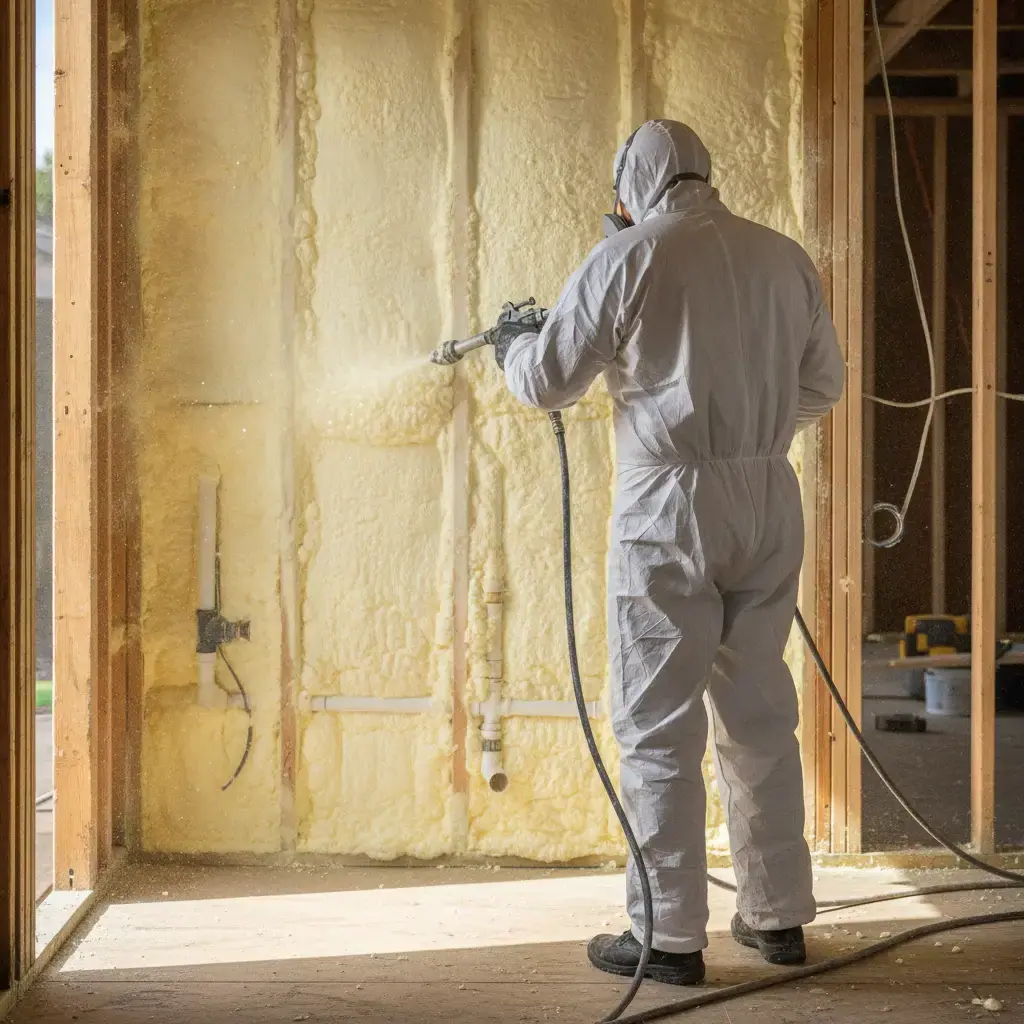
Spray foam attic insulation is a high-performance insulation method that uses a two-component liquid mixture — polyol resin and isocyanate — that expands on contact to create a seamless, airtight thermal barrier in your attic space. Unlike traditional batt or blown-in insulation, spray foam simultaneously insulates and air-seals, delivering dramatically superior energy efficiency in a single application.
In Hawthorne, CA, the combination of coastal marine layer humidity, intense summer heat radiating off LAX flight corridors, and the urban heat island effect created by dense South Bay commercial development makes attic insulation not a luxury — but a necessity. Homes in Hawthorne experience significant thermal stress year-round, and an uninsulated or poorly insulated attic can account for up to 40 percent of total home energy loss.
Read moreShow less
At Hawthorne Insulation Pros, our team specializes in spray foam attic insulation solutions designed specifically for the building stock, climate conditions, and energy demands of Hawthorne and the surrounding South Bay region. Call us today at (424) 449-0089 to schedule your assessment.
Understanding Spray Foam Attic Insulation
Spray polyurethane foam (SPF) insulation was first developed in the 1940s as a derivative of wartime polymer research, but it entered widespread residential use beginning in the 1970s energy crisis era. Today, it is recognized by the U.S. Department of Energy as one of the most effective residential insulation solutions available, achieving R-values between R-3.7 and R-6.5 per inch depending on formulation type.
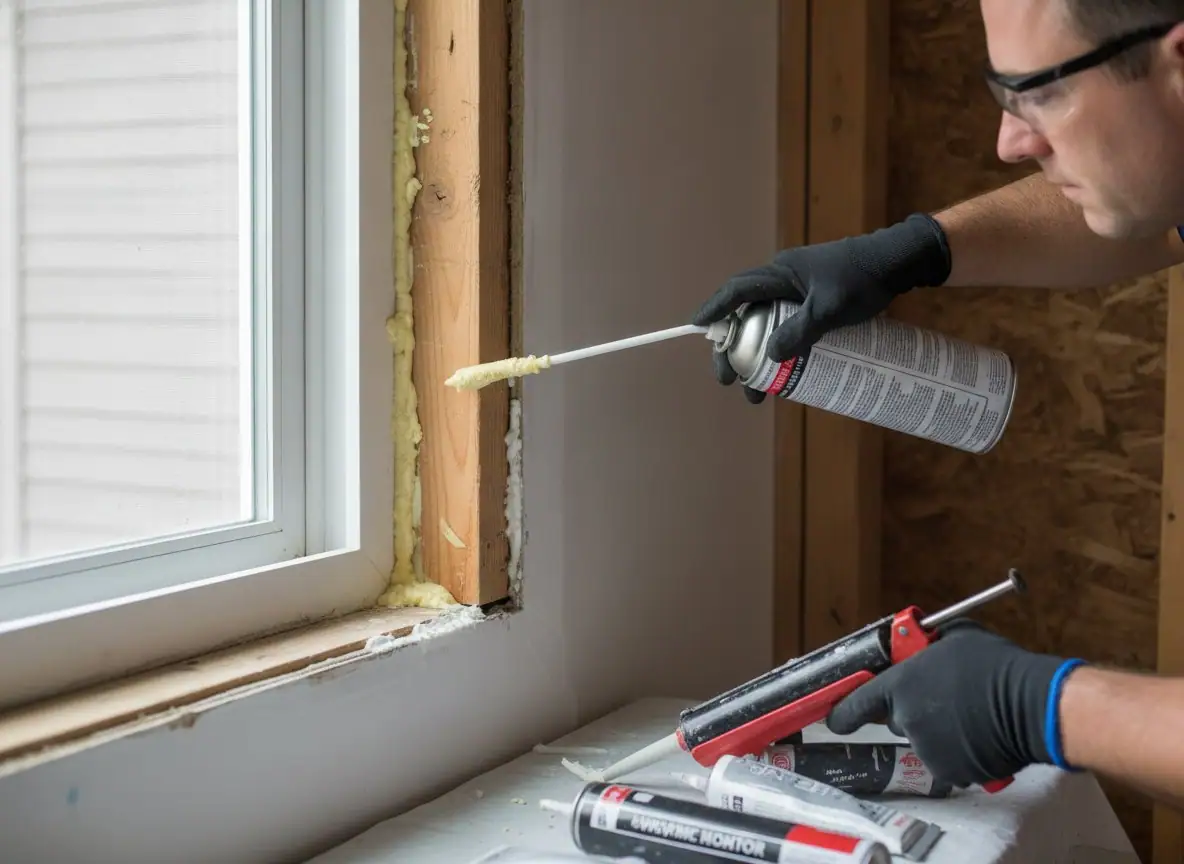
There are two primary categories of spray foam used in attic applications:
- Open-Cell Spray Foam: A softer, more flexible foam with an R-value of approximately R-3.7 per inch. Open-cell foam is vapor-permeable and highly effective for sound dampening — a significant advantage in Hawthorne given proximity to Los Angeles International Airport (LAX) flight paths that produce sustained noise exposure throughout the day and night.
- Closed-Cell Spray Foam: A rigid, dense foam with an R-value of approximately R-6.5 per inch. Closed-cell foam is also a vapor retarder, which makes it ideal for Hawthorne homes experiencing moisture infiltration from the marine layer that rolls in from the Pacific Ocean just 3 miles to the west.
Read moreShow less
In attic applications, spray foam is typically applied either to the attic floor (creating a conditioned crawl space below an unvented attic deck) or directly to the roof rafters and underside of the roof sheathing (creating a fully conditioned, unvented attic). The method chosen depends on your home’s HVAC configuration, existing duct placement, and structural conditions.
Hawthorne’s residential building stock spans several eras. Post-World War II tract homes built between 1945 and 1965 — which make up a significant share of the housing in neighborhoods like Holly Glen and Prairie Village — were often built with minimal insulation by modern standards. Many of these homes still have original fiberglass batts or no attic insulation at all. Mid-century construction practices also frequently included unvented attic spaces and shallow roof pitches that create unique spray foam application challenges our team is fully equipped to handle.
Modern construction in Hawthorne, including mixed-use developments and newer residential builds near the SpaceX campus corridor on Jack Northrop Avenue, increasingly specifies closed-cell spray foam as the insulation standard of choice due to its superior performance metrics and moisture resistance.
Why Spray Foam Attic Insulation Is Needed in Hawthorne, CA
The Marine Layer and Coastal Humidity
Hawthorne sits approximately 3 miles east of the Pacific coastline, placing it squarely within the zone of persistent marine layer influence. Between May and September — a period locals call “June Gloom” that often extends well into August — morning relative humidity in Hawthorne regularly reaches 85 to 95 percent before afternoon clearing. This sustained moisture exposure infiltrates attic spaces through soffit vents, ridge vents, and gaps in older roof assemblies. Over time, fiberglass batts become saturated, losing up to 40 percent of their effective R-value when wet. Spray foam, particularly closed-cell formulations, is impervious to moisture degradation, maintaining full thermal performance regardless of humidity conditions.
LAX Flight Path Heat and Noise Loading
Hawthorne lies directly beneath the primary arrival and departure flight paths for Los Angeles International Airport, one of the world’s busiest airports processing over 75 million passengers annually. Aircraft noise levels in residential neighborhoods such as Bodger Park and the streets south of El Segundo Boulevard regularly measure between 65 and 75 decibels during peak flight operations. Beyond noise, jet exhaust and aerodynamic friction contribute to elevated rooftop temperatures. Open-cell spray foam applied to roof rafter undersides in these neighborhoods provides significant noise attenuation — measured reductions of 10 to 15 decibels in treated attics — in addition to thermal insulation benefits.
Urban Heat Island Effect
Hawthorne’s dense commercial development along Hawthorne Boulevard, Rosecrans Avenue, and the Century Boulevard corridor creates a measurable urban heat island effect. Surface temperatures on commercial rooftops and asphalt parking areas in these zones can exceed ambient air temperatures by 20 to 30 degrees Fahrenheit during summer afternoons. Residential attics adjacent to these commercial corridors experience radiant heat loading that standard insulation materials cannot adequately address. Closed-cell spray foam applied directly to roof sheathing reduces attic air temperatures by blocking radiant heat transfer before it enters the conditioned living space.
Aging Housing Stock and Air Leakage
The majority of Hawthorne’s single-family residential neighborhoods — including Holly Glen, Ramona Village, and the historic blocks surrounding Hawthorne Memorial Center Park — contain homes built between 1945 and 1975. These structures typically experience significant air leakage through attic bypasses: gaps around plumbing penetrations, electrical wiring, recessed light fixtures, and HVAC ducts that were never properly sealed. The California Energy Commission estimates that air leakage accounts for 25 to 40 percent of heating and cooling energy loss in pre-1978 homes. Spray foam’s expansive nature fills and seals these bypasses completely during installation, providing an integrated air barrier that no other insulation type can match.
SCE Energy Cost Pressures
Southern California Edison (SCE) customers in Hawthorne face tiered electricity rates that increasingly penalize high energy consumption. As of recent SCE rate schedules, residential customers entering the third usage tier pay rates exceeding $0.40 per kilowatt-hour — among the highest residential electricity rates in the continental United States. Homes with inadequate attic insulation consistently run HVAC systems harder and longer, pushing energy bills into higher tiers. Properly installed spray foam attic insulation typically reduces HVAC energy consumption by 20 to 40 percent, providing measurable monthly savings against SCE’s tiered rate structure.
Free, no-obligation estimates
Talk to Hawthorne Insulation Pros
Tell us what you need and we’ll take it from there.
Signs You Need Spray Foam Attic Insulation in Hawthorne
Energy and Comfort Indicators
- Southern California Edison bills consistently higher than neighbors in similar-sized Hawthorne homes
- HVAC system running continuously during afternoon heat without achieving thermostat setpoint
- Noticeable temperature differences between upstairs and downstairs rooms exceeding 5 degrees Fahrenheit
- Rooms directly beneath the roofline feeling significantly hotter in summer or colder in winter
Physical Attic Conditions
- Visible fiberglass batt insulation that is matted, discolored, or falling away from joist bays
- Blown-in insulation that has settled to less than 6 inches of depth across the attic floor
- Moisture staining, mold growth, or condensation on attic framing members
- Visible daylight or gaps around plumbing stacks, electrical penetrations, or recessed fixtures
Urgency Indicators
- Active rodent or pest activity in the attic — pests can completely destroy fiberglass insulation within a single season
- Recent roof replacement that disturbed or removed existing insulation
- Home age over 30 years with no documented insulation upgrades in permit records
- HVAC ductwork located in the attic with visible duct damage or disconnection
Spray Foam Attic Insulation Methods and Approaches
Closed-Cell Spray Foam (Roofline Application)
Applied directly to the underside of roof sheathing and rafters, this approach creates a fully conditioned, unvented attic. It is the preferred method for Hawthorne homes with HVAC ductwork located in the attic, as it brings ducts inside the conditioned envelope and eliminates duct heat gain. Ideal for homes in the Bodger Park and Holly Glen neighborhoods where attic duct systems are common in post-war construction. Achieves R-6.5 per inch, reaching R-38 at approximately 6 inches of depth.
Open-Cell Spray Foam (Roofline Application)
A cost-effective alternative for roofline application that provides excellent air sealing and noise attenuation. Open-cell foam achieves R-3.7 per inch, requiring greater thickness to reach code minimums. Particularly valuable for homes directly beneath LAX flight corridors where acoustic performance is a priority alongside thermal performance.
Closed-Cell Spray Foam (Attic Floor Application)
Applied across the attic floor joists rather than the roofline, this method maintains an unconditioned attic space above while delivering superior air sealing and vapor control at the ceiling plane. Most appropriate for Hawthorne homes without ductwork in the attic and where budget constraints favor a more targeted approach.
Hybrid Insulation Systems
In some Hawthorne applications — particularly larger homes in the Ramona Village area — we combine a closed-cell spray foam base coat (1–2 inches) for vapor control and air sealing with supplemental blow-in insulation to reach target R-values cost-effectively. This approach balances performance with installation economics.
Spray Foam Attic Insulation Cost in Hawthorne, CA
Understanding the cost of spray foam attic insulation helps homeowners in Hawthorne make informed decisions and plan appropriately for this high-value home improvement investment.
Typical Price Ranges
- Open-Cell Spray Foam: $1.00 to $1.50 per board foot installed. For a typical 1,200 square foot Hawthorne attic treated at the roofline to code-minimum R-38, expect total costs of $2,400 to $4,500.
- Closed-Cell Spray Foam: $1.75 to $3.00 per board foot installed. The same 1,200 square foot attic treated with closed-cell foam to R-38 typically costs $4,500 to $8,500 depending on roof pitch complexity and access conditions.
- Hybrid Spray Foam Systems: $2,500 to $5,500 for typical Hawthorne single-family homes, depending on the ratio of closed-cell base coat to supplemental blown insulation.
Read moreShow less
Factors Affecting Cost in Hawthorne
- Attic access difficulty — shallow-pitch roofs common in post-war Hawthorne homes can complicate equipment positioning
- Existing insulation removal costs: typically $1.00 to $2.00 per square foot when required
- Extent of pre-installation air sealing work needed
- Presence of knob-and-tube wiring requiring contractor coordination before foam application
Available Incentives
SCE customers in Hawthorne may qualify for energy efficiency rebates on qualifying insulation upgrades. Additionally, federal Inflation Reduction Act tax credits cover 30 percent of insulation project costs up to applicable limits through 2032. Our team provides documentation to support all applicable rebate and tax credit applications. Contact us at (424) 449-0089 to discuss current incentive eligibility for your Hawthorne property.
Neighborhoods We Serve in Hawthorne, CA
Holly Glen
One of Hawthorne’s most established residential neighborhoods, Holly Glen contains a high concentration of post-World War II tract homes built between 1948 and 1965. These single-story and split-level homes frequently have shallow roof pitches and original fiberglass batt insulation at or below 2 inches of effective depth. Closed-cell spray foam roofline applications are particularly effective here given the neighborhood’s direct exposure to LAX approach paths along the Hawthorne Municipal Airport corridor.
Bodger Park
Bodger Park homes, many built in the 1950s and 1960s, sit in one of Hawthorne’s highest aircraft noise zones. Open-cell spray foam’s acoustic properties make it the preferred application for rafter-bay treatment in this neighborhood. Many properties here also have original aluminum wiring requiring electrical review before spray foam installation.
Ramona Village
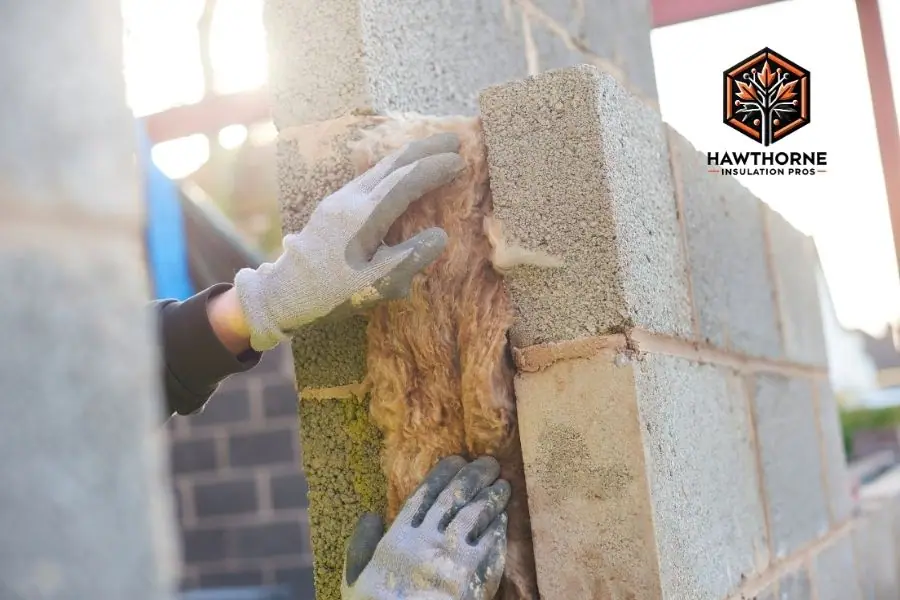
A diverse mix of single-family homes and small multi-family structures from the 1960s through 1980s. Ramona Village properties near the Prairie Avenue commercial corridor experience elevated urban heat island temperatures, making closed-cell roofline applications a strong investment. Crawl space insulation is also frequently needed in this neighborhood’s raised-foundation homes.
Prairie Village
Prairie Village contains mid-century modern architectural styles with unique flat and low-slope roof configurations. These roof assemblies require specialized spray foam approaches to manage drainage slopes and flashing conditions while achieving proper thermal performance at California Title 24 code standards.
Spray Foam Attic Insulation Maintenance Tips for Hawthorne Homeowners
- Annual Visual Inspection: Check spray foam surfaces once yearly for signs of cracking, separation from framing members, or UV degradation around any exposed foam near roof vents or access hatches.
- Monitor Attic Moisture: After winter storm events — Hawthorne averages 12 to 14 inches of rainfall annually — inspect attic spaces for any moisture intrusion around roof penetrations that could compromise foam adhesion.
- Maintain Soffit Vent Clearance: For vented attic configurations, ensure blow-in insulation or storage items do not block soffit vent channels, which can create moisture and thermal issues even with spray foam present.
- Protect from UV Exposure: Spray polyurethane foam degrades with prolonged ultraviolet exposure. Any foam visible through roof access panels should be coated with an appropriate UV-protective coating.
- Pest Monitoring: While closed-cell foam resists most pest intrusion, periodically inspect attic access points for rodent entry — a concern in Hawthorne neighborhoods adjacent to commercial zones along Hawthorne Boulevard.
- HVAC Filter Maintenance: After spray foam installation, HVAC systems run more efficiently and move air through the system at different rates. Replace filters on the manufacturer’s recommended schedule to maintain system performance.
- Document Installation Records: Retain installation documentation for SCE rebate compliance verification and disclosure to future buyers — a growing requirement in Los Angeles County real estate transactions.
Why Choose Hawthorne Insulation Pros
Hawthorne Insulation Pros is a locally focused insulation contractor serving Hawthorne and the South Bay region. Our team has direct, hands-on experience with the specific building types, climate conditions, and energy code requirements that define insulation work in Hawthorne — from the post-war tract homes of Holly Glen to the newer mixed-use developments near the SpaceX campus on Jack Northrop Avenue.
We offer the full spectrum of insulation services under one roof, including spray foam insulation, attic insulation, blow-in insulation, crawl space encapsulation, insulation removal, and insulation replacement. This means you work with a single, accountable contractor from assessment through completion.
Read moreShow less
We provide detailed written proposals, transparent pricing with no hidden fees, and complete installation documentation to support SCE energy rebate applications and federal Inflation Reduction Act tax credit filings. Our technicians are trained in California Title 24 compliance requirements applicable to Hawthorne’s Climate Zone 10 designation.
Call us at (424) 449-0089 to speak directly with a Hawthorne insulation specialist today.
FAQ
Frequently Asked Questions: Spray Foam Attic Insulation in Hawthorne, CA
How much does spray foam attic insulation cost in Hawthorne, CA?
Spray foam attic insulation in Hawthorne typically costs between $2,400 and $8,500 for a standard single-family home attic, depending on foam type, coverage area, attic configuration, and whether existing insulation removal is required. Open-cell foam runs $1.00 to $1.50 per board foot installed; closed-cell foam runs $1.75 to $3.00 per board foot. SCE rebates and federal tax credits can reduce net out-of-pocket costs significantly. Contact us at (424) 449-0089 for a precise estimate based on your specific property.
How long does spray foam attic insulation installation take in Hawthorne?
Most residential spray foam attic insulation projects in Hawthorne are completed in one to two days. Day one typically covers preparation, existing insulation removal if needed, and air sealing. Day two covers foam application and post-installation inspection. Larger or more complex projects — such as multi-unit properties in Ramona Village or homes with significant pre-existing issues — may require additional time.
Is spray foam attic insulation worth it for Hawthorne homes given the mild climate?
Yes. While Hawthorne does not experience extreme winter cold, the combination of intense summer radiant heat from LAX flight operations, the urban heat island effect along Hawthorne Boulevard and Rosecrans Avenue corridors, marine layer humidity infiltration, and Southern California Edison’s high tiered electricity rates make spray foam attic insulation one of the highest-return home improvements available to Hawthorne homeowners. Most properly installed projects achieve payback periods of 5 to 8 years through energy savings alone.
Do I need to vacate my home during spray foam installation?
We recommend that residents vacate the home during application and for a minimum of 24 hours following spray foam installation to allow complete off-gassing of the curing foam. Pets should also be removed. Our team will provide specific guidance based on the ventilation configuration of your Hawthorne home and the foam product being applied.
Can spray foam insulation help with LAX aircraft noise in Hawthorne?
Open-cell spray foam applied to rafter bays at the roofline provides meaningful acoustic attenuation, with measured noise reductions of 10 to 15 decibels in treated attics compared to uninsulated or fiberglass-insulated equivalents. While it does not eliminate aircraft noise, it produces a noticeable improvement for Hawthorne residents in the Bodger Park and Holly Glen neighborhoods closest to LAX flight paths.
What R-value is required for attic insulation in Hawthorne, CA?
Hawthorne falls within California Climate Zone 10 under Title 24 energy code requirements. The code-minimum R-value for attic insulation in this zone is R-38 for most residential applications. We always meet or exceed this threshold and can design systems to R-49 or higher where energy modeling supports the additional investment.
Can spray foam be applied over existing insulation in my Hawthorne attic?
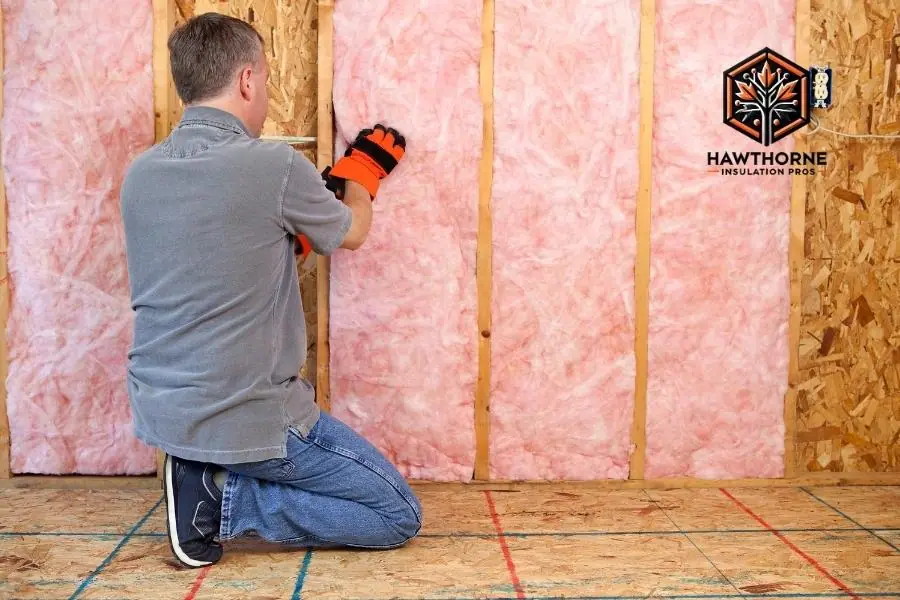
In some cases, yes. If existing insulation is structurally sound, dry, and free of pest contamination, spray foam can be applied on top of or alongside existing material. However, for most older Hawthorne homes with degraded fiberglass batts or contaminated blown-in insulation, full removal prior to spray foam installation produces superior results. Our assessment will determine the appropriate approach for your specific attic conditions.
Does Hawthorne Insulation Pros offer financing for spray foam projects?
We work with customers to identify available SCE energy efficiency rebates and federal tax credits that can significantly offset project costs. We are happy to discuss financing options and available incentive programs during your free on-site assessment. Call (424) 449-0089 to learn more.
Get Your Free Spray Foam Attic Insulation Assessment in Hawthorne Today
If your Hawthorne home is losing energy through an under-insulated attic — or if you’re dealing with uncomfortable rooms, excessive SCE energy bills, or moisture issues driven by the South Bay’s marine layer — Hawthorne Insulation Pros is ready to help.
Our team provides free, no-obligation on-site assessments for homeowners and property managers throughout Hawthorne, CA. We evaluate your current attic conditions, recommend the right spray foam solution for your specific building type and budget, and walk you through all available SCE rebates and federal tax credit opportunities.
Don’t let another Southern California summer push your energy costs deeper into SCE’s upper rate tiers. Contact Hawthorne Insulation Pros today:
- Phone: (424) 449-0089
Call now to schedule your free Hawthorne attic insulation assessment.
Get in touch
Find insulation help near you
Request a free estimate online or give us a call — our team will follow up quickly.
- Call us(424) 449-0089
- Visit4910 W Rosecrans Ave, Hawthorne, CA 90250
- HoursMon-Sun 07:00-19:00